SIGN PETITION
lovemorrisct@gmail.com
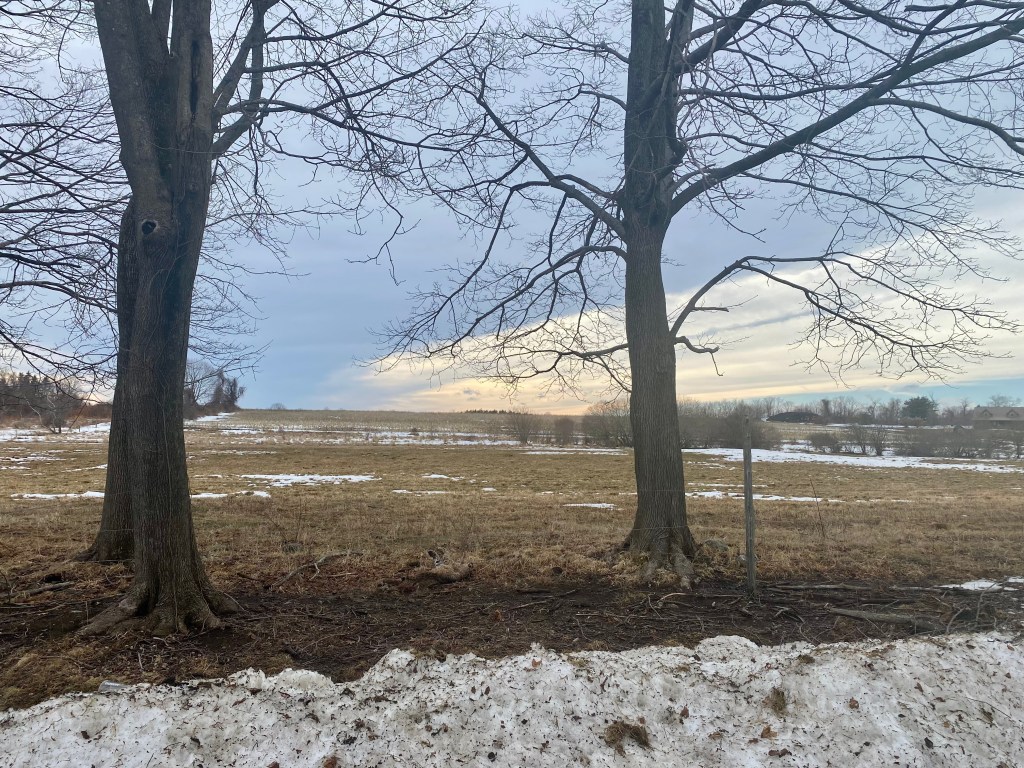
TOWN HALL MEETING
FRIDAY, MARCH 20TH, 5 PM
This is your chance to ask questions, voice your concerns, and request the solar company mitigate negative effects
TWO MORRIS SOLAR “FARMS”
The following information is meant to inform the citizens of Morris about two major solar/power station proposals being considered for our town, covering over 40 acres in residential neighborhoods. The proposed sites are located in close proximity to each other and the center of Morris. These types of installations have been researched by scientists, environmentalists, and universities – and there are legitimate concerns.
Please note that a recent proposal has been struck down in Torrington. The Mayor and town attorneys got involved to support the well being of their citizens and environment. These proposed installations are popping up all across CT with many towns pushing back such as Woodbury, Manchester, E. Windsor, Torrington to name a few.
Read on to learn:
- details about the proposed locations
- concerns related to the environment, public health, property values, and our “right to peaceful enjoyment”
- what Morris residents can request of these solar companies
- A handful of links are provided down below; there are many more studies and articles available online
WHO APPROVES SOLAR FARM APPLICATIONS
Commercial solar installations do not require approval by the town municipality; the CT Siting Council approves or denies these applications. The Siting Council’s responsibilities include:
- balancing the need for adequate and reliable public utility services at the lowest reasonable cost to consumers with the need to protect the environment and ecology of the state and to minimize damage to scenic, historic, and recreational values
- providing environmental standards for the location, design, construction, and operation of public utility facilities that are at least as stringent as federal environmental standards and that are sufficient to assure the welfare and protection of the people of Connecticut;
CT SITING COUNCIL – FILING GUIDES
Greenskies Proposal
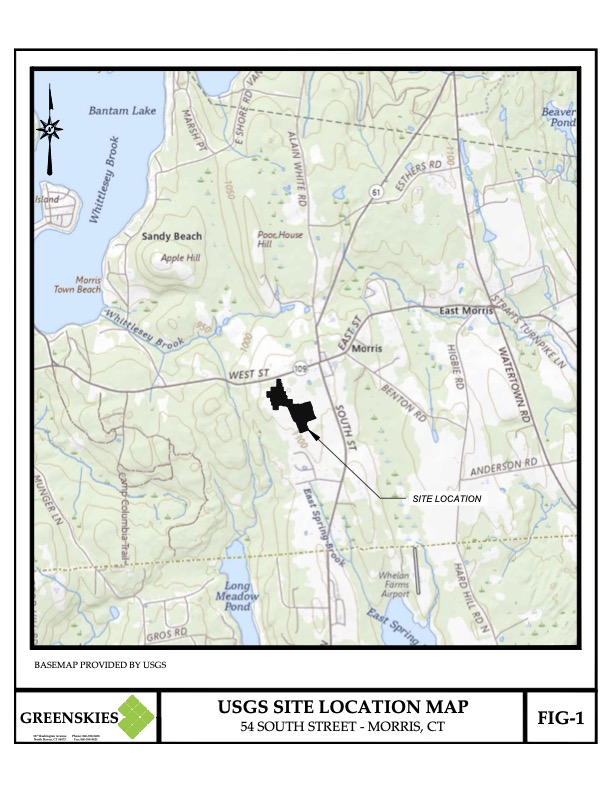
The Greenskies proposal, petition 1686, involves installing solar panels, and the associated power station, on approximately 20 acres of “designated prime farmland” which is surrounded by wetlands, in the center of Morris. The property is owned by Jim Tillson. These acres border both West Street and South Street. The Greenskies application has been preliminarily approved by the Siting Council pending a list of conditions being met, which includes submitting “a status update on any concerns expressed during the community meeting prior to the commencement of construction.” This community meeting is being held on March 20th 5 PM at the town hall.
Lodestar Proposal
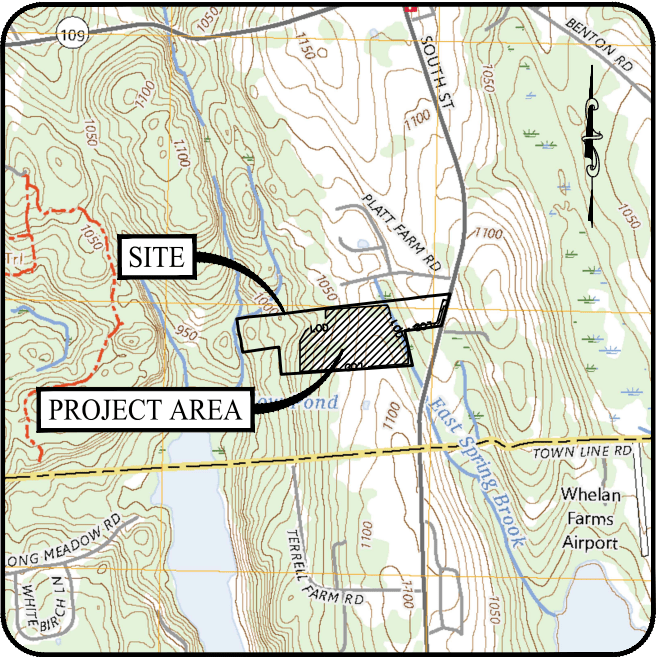
The Lodestar proposal, petition 1695, also involves installing solar panels, and the associated power station, on approximately 20 acres of “designated prime farm land” near the center of Morris. The acreage borders South Street and the N.Terrell Farm Road neighborhood. Again, commercial solar installations do not require approval by the town municipality; the CT Siting Council approves or denies these applications. The CT Siting Council has not yet voted on the Lodestar application.
If both Greenskies and the Lodestar applications are approved, many residents will be boxed in between two installations.
CONCERNS
Solar energy is widely celebrated as a clean energy solution. Many solar companies (a significant number have foreign parent companies) are installing solar projects across the country. As more studies are conducted, a growing number of critics are raising concerns about the community, environmental, and agricultural impacts of solar array construction. These concerns include habitat disruption, land use, soil health, water contamination, and the health/quality of life concerns for the community. The waste management of decommissioned panels is regulated by the EPA. The solar panels installed by Greenskies and Lodestar both contain lead from solder. Some solar panels also contain forever chemical (PFAS), cadmium, arsenic, and other heavy metals.
Since these projects can have negative impacts in the short term and long term, many feel that they are better located in greyfields (abandoned shopping centers and malls) or brownfields (abandoned industrial sites), or at the least located away from residential neighborhoods.
Before final worksite approval, the Connecticut Siting Council and the relevant solar company are required to determine whether the project causes unacceptable environmental or community impacts, particularly involving:
- drinking water contamination
- residential proximity
- health and quality of life concerns
- wetlands and watershed impacts
- endangered species habitat impacts
- farmland loss
These factors are usually reviewed under environmental standards reflected in federal laws such as the National Environmental Policy Act and the Endangered Species Act, as well as Connecticut statutes like the Connecticut Inland Wetlands and Watercourses Act.
It is not clear if the Siting Council considers the devaluation of properties abutting and surrounding the proposed site. Studies show homes within a 1/2 mile radius are generally affected.
What Residents Can Request of Solar Companies
MAXIMUM MITIGATION REQUIREMENTS
If either project is granted final worksite approval, Morris residents can request binding conditions of approval. These conditions should be written so they become legally enforceable permit requirements. The project should be denied if environmental impacts cannot be agreed upon.
If the Connecticut Siting Council grants final worksite/plan approval, strict enforceable conditions should be imposed including the following (each point is expanded upon below):
- large residential setbacks
- layered vegetative buffer zones
- stormwater and watershed protection
- monitoring
- well protections
- wildlife surveys and habitat protection requirements; environmental monitoring
- fire and hazardous material safety plan
- agricultural land/ farmland safeguards
- traffic and infrastructure protections
- property value protection fund
- decommissioning financial guarantees
This approach aligns with how the Connecticut Siting Council typically evaluates contested energy siting cases
1. Large Residential Setbacks
- Minimum 300-500 foot setback from residential dwellings
- These large area setbacks reduce:
- Visual Impact
- Glare Exposure
- Noise from Inverters
- Safety Risks from Exposure to Electromagnetic Fields
2. Layered Vegetative Buffer Zones
- Three rows of evergreen trees (12–15 ft height minimum)
- Minimum 50–100 ft vegetative buffer
- Advantages to the community and wildlife:
- restricts visual incursion
- lessons or suppresses sound
- encourages and restores wildlife habitat
3. Stormwater and Watershed Protection
This is imperative as these solar plants are located near reservoirs or aquifers
Measures that need to be implemented:
- engineered stormwater retention basins
- groundwater monitoring wells
- runoff filtration systems
- independent hydrology review
4. Monitoring
To be conducted by an appointed Independent environmental body
The Morris Community should request:
- third-party environmental monitor paid by the developer
- yearly environmental impact reports
- community access to the monitoring data
5. Well Protections
Required Protections for private wells:
- baseline well testing before construction
- annual testing during operation
- developer-funded remediation if contamination occurs
- emergency water supply for residents
6. Wildlife Habitat Protection Requirements
Prior to Worksite Approval the Following Must Be Conducted:
- multi-season wildlife surveys
- consultation with the U.S. Fish and Wildlife Service
- habitat conservation plan if endangered species are present
7. Fire and Hazardous Material Safety Plan
What toxins would become air born and rain down on the community if the installation was to set fire? A quick google search will show that this has happened in some communities, so it is possible.
- This is needed because the solar framework has electrical systems and hazardous materials
- Damage, failure, or combustion of solar panels could release hazardous materials (e.g., lead, cadmium, PFAS) into air, soil and groundwater
- Electrical storms (lightening) can set panels on fire in addition to system malfunction
- Mitigation:
- A fire suppression plan approved by the area/responding fire departments
- hazardous material containment response protocols
- plan for emergency response coordination
8. Agricultural Land/ Farmland Safeguards
Possible alleviation requirements/steps:
- prohibition on soil compaction
- agrivoltaic land-sharing (solar with agriculture)
- use of animals such as goats or sheep to address weed and overgrowth in and around the
solar structure, as opposed to the use of herbicides
9. Traffic and Infrastructure Protections
Guidance from the Federal Highway Administration
During Construction:
- traffic management plan
- road damage compensation
- restricted truck routes
- dirt/dust/debris control and suppression will be necessary as the soil will be disturbed; water and standing barriers to be utilized. If the dirt/dust/debris is not kept under strict control nearby
residents will be adversely affected.
10. Property Value Protection Fund
Past practice requires developers to establish community compensation funds. Possible relief:
- a property value guarantee program, as surrounding homes can see assessment reductions
- If surrounding homes suffer an assessment decline, affected homeowners should be compensated
- reimbursement for well contamination
11. Decommissioning and Financial Assurance
Recommendations by the U.S. Department of Energy solar siting guidelines
The solar companies should provide:
- decommissioning bond or escrow account
- funding for the removal of panels and infrastructure
- land restoration plan.
Additional Sources:
“How Do Solar Farms Affect Property Values,” Virginia Tech College of Agriculture and Life Sciences
Chenyang-Hu et all, “Impact of large-scale solar on property values in the United States: Diverse effects and causal mechanisms,” Economic Sciences
Soil and Water Contamination from Renewable Energy, Clean Energy Council
Syed, “The Hard Truth of Building Clean Solar Farms“, Popular Science
Lovich & Ennen, “Wildlife Conservation and Solar Energy Development,” BioScience
https://www.epa.gov/privatewells/protect-your-private-well
Cook & McCuen, “Hydrologic Impacts of Solar Energy Development,” Journal of Hydrologic
Engineering
Governmental policy/law/guidance: U.S. Environmental Protection Agency stormwater best-management practices
Hernandez et al., Renewable and Sustainable Energy Reviews (2014)
“What are the Health Risks When Living Near Solar Farm Places,” EMF Risks
“Health Risks of Solar Panels,” Center for Electrosmog Prevention
Tsoutsos et al., “Environmental Impacts from Solar Energy Technologies,” Energy Policy
Environmental impacts of utility-scale solar energy
Solar Energy Development Environmental Considerations
U.S. Department of Energy, Utility-Scale Solar Energy Environmental Impact Studies
Tsoutsos, Frantzeskaki & Gekas, “Environmental Impacts from the Solar Energy Technologies, ”Energy Policy, 2005
Connecticut Siting Council Petition Process Guidelines
U.S. Environmental Protection Agency, Public Participation Guide
U.S. Environmental Protection Agency Compliance Monitoring and Enforcement Framework
Policy/Standards published by the National Fire Protection Association
 lovemorrisct.com